....I'm going to make the uneducated guess that this meeting is in Antarctica. That's where my grad school roommate worked for 7 years but now got downgraded to working in the middle west somewhere.
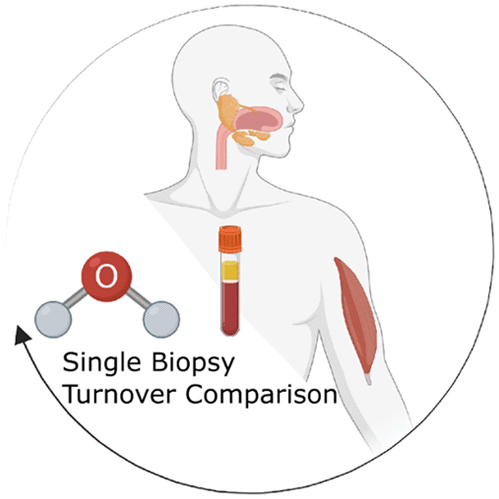
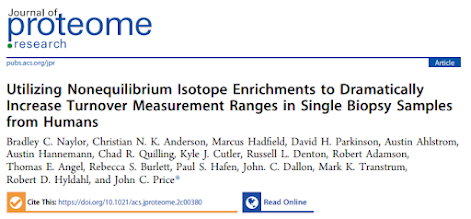
"...because serial biopsies in humans are impractical..." (yeah...maybe a stronger word belongs at the end, but the point stands) it is really hard to truly understand in vivo protein turn over in humans.
So....what if you could talk an IRB (and some undergrads?) into having the latter drink deuterated water every day for a while and provide you with saliva serum and muscle samples here and there?
Samples were analyzed on a tribrid Orbitrap system and to work out this new metabolic model, you'd need new software and you can get that here.
Wow, right?!?!
Until recently I kept forgetting that US HUPO was a thing, it was even just outside of Baltimore a couple of years ago and I just forgot it was a thing until cool people started texting me to see where I was. This isn't a dig on US HUPO, we just got into some totally f'ed up traffic last week because I forgot that American football is still a thing and right after a match we were on the wrong side of a stadium from home and it took a really long time around people who appeared to be driving somewhat or incredibly impaired.
Well, US HUPO IS a thing and they are putting on all sorts of great remote learning things all the time! There are 3 great ones of note in just the next 3 weeks! You can check them out and register here.
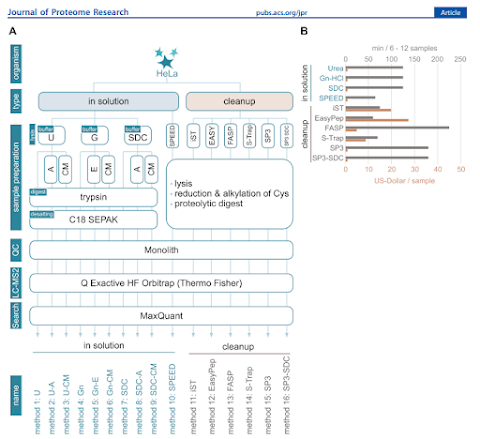
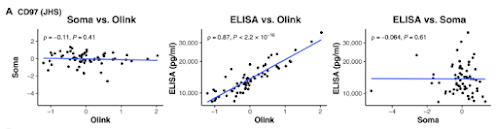
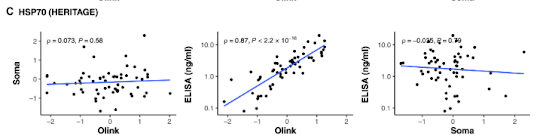
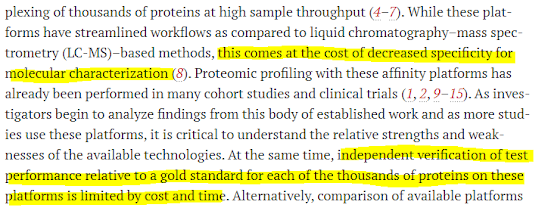
If LCMS proteomics is going to scale up to the levels of new proteomics technologies that are willing to compromise specificity for throughput, we need to trim down the 4,512 different sample prep methods each lab has sitting around in stacks. You can't tell make a sensible argument that about 4,400 of them are unnecessary.
What we need is some people to do the most boring studies imaginable just to get them out of the way.
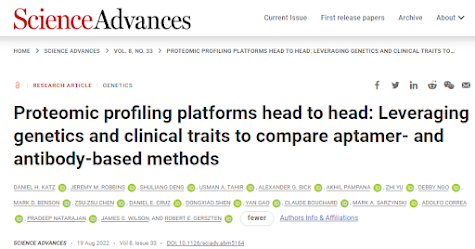
OMG. From the pit of my heart, I can't thank these authors enough for this study. It should be referenced by everyone in proteomics all the time. "What do you think about method A vs method B"? I have a hunch but nothing robustly tested but ---
-- these awesome people tested them all! (Well...not all 4,512....but a whole ton of them!)
Sure -- number of proteins are one metric -- but they ALSO break down the relative costs of the different methods! Proteomics sample prep has historically been pretty cheap from a reagent perspective compared to DNA/RNA assays that still require hundreds of dollars in reagents. But when you're setting up a 100 sample or a 4,000 sample study, those filters or traps and C-18 spin columns (and TRYPSIN) costs don't seem that irrelevant anymore. On a big study I recently realized that the 1:10 trypsin ratios recommended for some commercial kits was going to blow through every vial in our -20C in very short order. This group considered these factors!
What wins? Nah, you gotta read this so you see how awesome it is. And you've got to remember to cite it later!
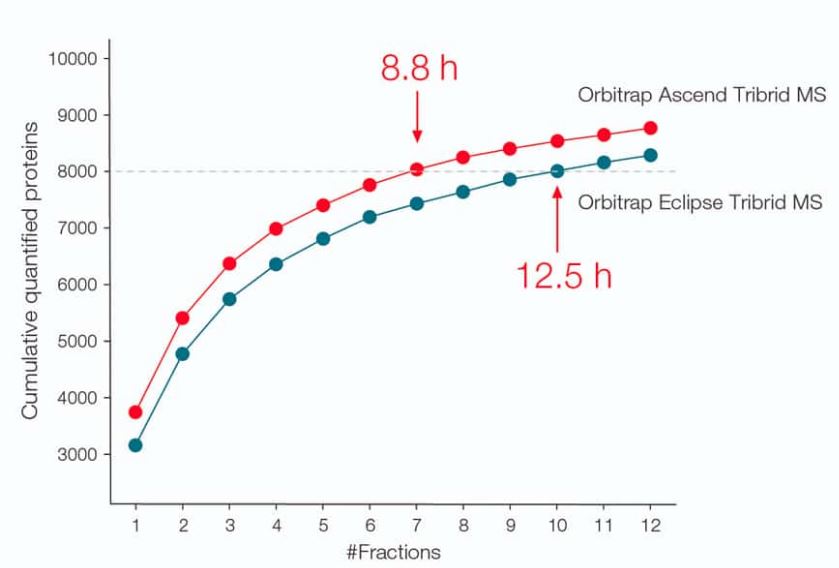
This is old news for any of you lucky people who were in Maastricht, but for those of us waiting on the edge of our seats for every little Assend leak to trickle out, this big drop of information finally puts the hardware in perspective.
There is a reeally cool little video at the bottom of the page with some gripping piano music that shows the whole ion movement from beginning to end for a typical data dependent experiment.
(Please see disclaimers over there --> as always, I'm just trying to help get information out there!)
Based on the architecture itself and what has been publicly released, the performance gains reported by Gygi Lab and Coon Lab are much better than I was expecting. This suggests to me that the obvious new fetures added (like a whole new multipole) aren't the whole story. There is likely some additional efficiency gains here and there.
Honestly, on paper, I never expected the Fusion 3 Eclipse to be a big step up from the Fusion 2 for data dependent shotgun proteomics (I thought it was just for intacts and they'd kind of forgot about the DDA crowd), but when you actually process the data I have been impressed by the step up. It is easy to forget how complex modern instruments are and how little much little improvements like slightly reducing a gating time can lead to big improvements.
Personally, I imagine that they're very tech savvy people who bring broad expertise in from whatever field they come from that readily translates to a deep understanding of any new technology!
Time to change the topic to something completely different.
I don't think I've ever enjoyed a movie with Jim Carrey(sp?) in it enought to finish it. Even when he was seemingly in every 4th film in theaters I just found him completely unwatchable. However, I found this gif somewhere and I don't even know what movie it is from, but I have worn something remarkably similar to what he is wearing in this gif below.
IMSC 2022 Part 3: Wednesday to Friday
Wednesday, August 31, Day 3
Science Summary: It is difficult to pick between the
best plenary/award talks of the week, but the Wednesday morning talks from Curt
Brunnee Award winners Livia Eberlin and Erin Baker and inaugural Jochen Franzen
Award winner Shane Ellis might have taken the cake. Following those, I saw
great talks from Tami Geiger and Hem Gurung in the Translational MS/Cancer and
Immunology morning session, and then chased talks between the Top Down and
Imaging MS sessions after that. Wednesday saw a change over of posters (M/T vs
W/Th groups), which brought more great poster discussions after a Thermo lunch
seminar from Daniel Lopez Ferrar and Kay Oppermann about the AccelerOme. I
spent most of my afternoon time in the second Glycomics and Glycoproteomics
session of the week that featured interesting work focusing on structural
characterization of both glycans and glycoproteins from Javier Torano and Cathy
Costello, among others. I also was able to catch some cool real-time ID/quant
work from both Gad Armony (Wessels group) and Chris McGann (Schweppe group). One
of the highlights for me was Noortje de Haan’s talk in the Glyco session that
showcased how glycogenomics and MS can work in tandem for O-glyco studies. If
that sounds interesting to you, check out recent work from the Copenhagen Center
for Glycomics.
Social Summary: Navigating the bus system in
Maastricht is relatively straightforward, unless you assume there is only one
train station. I confidently claimed a bus was going to the train station and
led a group to the lesser-known, non-central train station several miles north
of the city by mistake. I guess this is the price I pay for trying to only rely
on free wifi at the conference center and hotel instead of double checking
these things in real time with cellular data (which I eventually turned on). My
bad, folks.
Culinary/Cultural Highlights: Erin Baker gave a nice (terrifying?) summary of how PFAS is everywhere, including our plastic food wrappers. It made the loud crinkling of plastic wrappers of the pre-packaged food during the lunch seminars sound that much more noticeable with a few more side glances than previous days. On a different note, the non-plastic-wrapped snacks and refreshments during the breaks and poster sessions seemed to only get better with each passing day.
Thursday, September 1, Day 4
Science Summary: A consistent theme here is the
excellence of the morning award talks, and the presentation from Thomson Medal
winner Vicki Wysocki was no exception. I unfortunately had to step out and miss
the Thomson Medal talk from Lidiya Gall, but I was glad I at least was able to
hear her present during the FeMS workshop on Monday night. Morning talks in the
Biosimilars, Biobetters, and Glycoengineering session were mostly
antibody-focused, with my favorite being the multi-protease approach to de
novo antibody sequencing from Weiwei Peng (Snijder group). I also liked
Johannes Helm’s (Altmann group) talk about PGC for isomer-specific N-glycomics
and Mike Gross’s talk about different footprinting techniques, especially
NanoPOMP, for membrane proteins. I spent my afternoon session in the second
Young Mass Spectrometrist session, and each talk was impressive. If you are
looking to know where the next generation of MS research is heading and you
haven’t seen work from Karina Gonzalez-Estanol, Na Wu, Lieke Lamont, Guinevere
Lageveen-Kammeijer, or Andrej Grgic, I highly recommend you check out their
work.
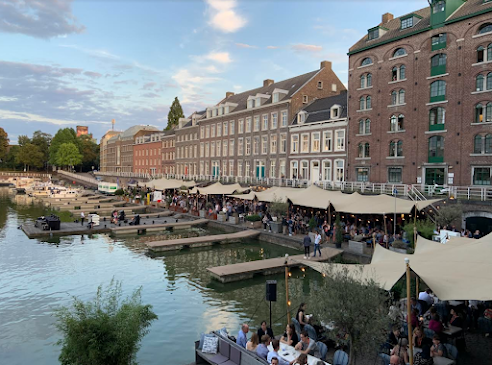
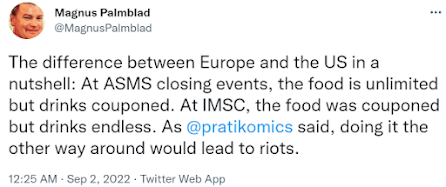
Social Summary: The conference closing event was a fitting celebration of the science and scientists at the meeting. Set along a small harbor in Maastricht, it was an outdoor setting that underscored the good weather and fun city that IMSC 2022 enjoyed. I think this tweet summarized things nicely:
(Note, the time stamp is for my current time zone, not the
local time zone where it was tweeted – I think.)
Culinary/Cultural Highlights: The couponed food was all pretty enjoyable, with one notable exception. Perhaps the Europeans will take issue with this assessment, but the trout paste “delicacy” was an acquired taste that several us had yet to master. Luckily, the other good food and non-couponed drinks helped clear the palate.
Science Summary: Similar to ASMS, if you stick around
until the last day at IMSC, you are likely to enjoy some excellent science
without as crowded of rooms. Still, I thought Friday was relatively well
attended considering the jam-packed week it had been. Morning sessions included
really interesting talks in the second High Resolution MS session that included
everything from lipid nanoparticles to 18-plex TMT work on the Orbitrap Ascend,
and the PTM crosstalk session and the second Imaging MS session also had full
lineups of great presentations. The afternoon included a closing plenary and
outlook for the next IMSC in Melbourne. To summarize the entire IMSC 2022
experience, it was quality science and quality social interactions from top to
bottom. As I said in the first post, IMSC is now a conference that will
consistently be on my radar.
Social Summary: I had a list of people I had wanted
to catch up with or meet throughout the week, and a thinned out crowed on
Friday morning helped facilitate a few meetings I was glad to have. I never
really thought about it this way before, but for younger researchers who may
want to connect with more established folks, these last conference days when
everyone is a little less flooded with interactions from all sides might be
useful. That said, beware that fatigue is real, and not everyone will be ready
to have in-depth discussions.
Culinary/Cultural Highlights: The snack during the
breaks between presentationso n Friday was vlaai, a Dutch pie-esque pastry, and
it was amazing. Keep it on your list of food to try if you make it to the
Netherlands.
For the first part of Dr. Riley's recap of IMSC2022!
For the final part, click here!
IMSC 2022 Part 2: Sunday to Tuesday
For frame of reference, days started at 8:30a, lunch was generally 1-2p, even workshops started at 6p, and most nights did not end until well after midnight for those who wandered into the city center. So yes, the typical conference schedule.
Sunday, August 28, Day 0
Social Summary: The opening ceremony kicked off with a short introduction of talking that was punctuated by a 15 min samba drum performance. Yes, really. The group called Segura had interspersed throughout the crowd and slowly made their way to the stage until the full ensemble danced to their drum beats. It was very cool and unexpected, and it helped some bleary-eyed travelers fighting jetlag (read: me) wake up and enjoy the opening lectures.
Culinary/Cultural Highlights: The opening reception was a great first connection point to talk with folks. It went a little late to be able to grab dinner afterward (things close early on Sunday nights in the Netherlands), but lucky a local döner stand was there to make sure several of us got food. If you haven’t enjoyed a döner kebab before, imagine the Turkish version of a gyro in a pita pocket instead of a pita wrap. They are always a highlight of traveling in Europe.
Monday, August 29, Day 1
Social Summary: The FeMS Workshop led by Anne Bendt (a found of FeMS) and Purva Kulkarni included talks from Jenny van Eyk, Manfred Wuhrer, Berta Cillero Pastor, and Vicki Wysocki (who pulled double duty and came to present after leading the concurrent Native MS Workshop). Erin Baker and Cathy Costello sat right behind me in the workshop and offered some highly useful insights, too. The drink hour after the workshops helped everyone connect and find dinner plans after the first full day of the conference. Instrument companies did not have hospitality suites per se, but instead claimed local bars in the city center as their hang out. I did not hear any complaints.
Tuesday, August 30, Day 2
Social Summary: More evening workshops kept some attendees
engaged, but I, for one, could feel the slightest air of fatigue setting in
after the afternoon talks wrapped up. Regardless, it seems as if everyone
collectively found their second wind after dinner because the city center played
host to plenty of IMSC badger-wearers late into the night.
Culinary/Cultural Highlights: A group of us randomly stumbled into a wonderful Greek restaurant that was an unexpected treat. Also, the local Stadtbrouerij made for an enjoyable aperitif. On another note, Maastricht must host a decent number of conferences or events, because the bus drivers were not phased in the slightest by 50+ people piling onto the bus at the conference center stop, all of whom were riding for free as long as they had their conference badget (thanks IMSC organizers!).
We're at a point where if you aren't using machine learning or deep machining or intelligent artificialness in proteomics data processing, you're on the outside looking in.
For a great recent review of the topic check this out!
I found the password to the blog!
For the first post, I'd like to talk about IMSC2022. If you had COVID and it affected your memory,
IMSC stands for the Independent Mystery Shopper's Coalition, and a lot of people went to Maastricht recently to see the release of the Orbitrap Assend there!
If you want to learn about it, don't go to the homepage, you'll want to put the year of the conference before the .com (https://www.imsc2022.com/). Don't leave out the year, for real.
One person who did go to Maastricht was Dr. Nick Riley. Nick is a postdoc in the Bertozzi group at Stanford and he volunteered to provide an on-the-ground perspective of this conference.
IMSC 2022 Part 1: Overall Summary
I had the privilege of attending the International Mass Spectrometry Conference this past week in Maastricht, the Netherlands. The vibrancy of this year’s IMSC is hard to capture in words, but I will try to do as much here. It was a thoroughly enjoyable experience and is probably in the top 3 for conferences I have attended thus far in my decade in research. A mixture of great science, wonderful personal connections, and a highly enjoyable European backdrop made for an unforgettable meeting. Thank you to the organizers (Albert Heck, Ron Heeren, Manfred Wuhrer, the Dutch Society for Mass Spec [NVMS], and all those who helped otherwise) for all of your efforts make IMSC a success. Here is my best attempt to distill the meeting down into a few “short” descriptions for those who could not attend.
Some first thoughts
The size of IMSC struck a balance between Gordon or Keystone
Conferences and ASMS. There were approximately 1300 attendees if I remember
correctly, with a majority (unsurprisingly) from Europe. It was nice as a
US-based attendee to hear from and interact with many brilliant scientists who
I only previously knew from publications. This different cross-section of
science I was exposed to the past few days was a healthy reminder that ASMS, as
great as it is, still only captures/emphasizes a limited scope of our field.
The general daily structure of the meeting followed a common pattern. Each day started with morning award presentations that were the only event on the schedule. This was a good thing, because they were all outstanding and deserved full attention. My notes from each of them include as many thoughts about life/research advice as they do about the science that earned the awards. Those talks were followed with a very welcomed coffee break that often featured baked goods and facilitated a lot of science cross-pollination. Concurrent oral presentation sessions followed the coffee break, then a lunch hour where vendors had presentations to attend, a poster session to start the early afternoon, later afternoon concurrent oral presentation sessions, and then evening workshops. All poster sessions and breaks featured access to gratuitous amounts of coffee and tea, which really helped this jetlagged American survive. Overall, the quality of both oral and poster presentations was stellar. If there was one topic that had the most representation, it was probably mass spec imaging, which should not be surprising given the proximity of the M4i Institute, but there was a good mix ranging broadly from instrumentation and applications. I’ll touch more on high-level details from each day in two subsequent entries.