Monday, December 10, 2018

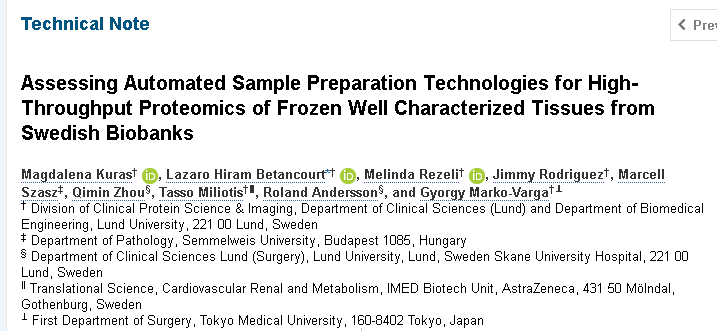
Assessing automatic sample prep technologies!


Was this already on here? I forget. And does it really matter anyway? This is cool enough to talk about more than once!


Honestly, in general, all these robots are freaking me out a little. It seems like every time I go to a store or leave a parking lot, there is one more robot thing and one less person working. And it's weird.

However -- in science, where reproducibility is kind of insanely of completely paramount somewhat importance -- automation is amazing!

Max Planck is using the Agilent thing.
This new study used a bunch of things -- and the reproducibility is kind of insanely completely awesome looking -- even on samples that are prepped on separate days!

Sunday, December 9, 2018

OMNITRAP -- Upgrade your QE to do EVERYTHING!!


DO YOU KNOW ABOUT THIS THING?!?!? IT'S AWEEESSSOOOMMMEEEE!!

Apparently, I've been under a rock for a while. Or hiding from my...


...few unanswered emails.... Don't worry. It is mostly because I bought a compost bin from Amazon in 2015 and now obviously I'm a compost bin collector now.

I'm driving home from horrendous holiday shopping craziness and my wife is flipping through the new Science and less cool Scientist and reads off something about Roman Zubarev (Ben is paying attention) and then reads off details about the "omnitrap" (Ben is having trouble keeping a hybrid in it's lane) and then "that it's an upgrade for any Q Exactive! (Ben requires moving from driving to being the passenger).


You add the OmniTrap to the back end of your Q Exactive.

It costs you about $250-$300k

It gives that Q Exactive some new capabilities. Like --


I don't even know what all those things are!  I just know that I don't have them. And I sure would like to.....

Saturday, December 8, 2018

Split resolution control on the QE HF Turbo!


Okay -- am I an idiot? Sure. Yes. Totally. But after a night of broken Orbi XL and-still-not-working after the rainstorm Orbi Elite AND the HF slEasyNano on the fritz again -- maybe being able to FINALLY GET AN MS1 RESOLUTION BETWEEN 60,000 and 120,000 is cause for celebration!

BIG SHOUTOUT TO:

Mark Ivanov and
Elizaveta Solovyva

of the great Gorshov lab for taking a look at my data, finding dumb mistakes that I personally made and showing me awesome new tools I can't talk about quite yet.

To be clear, they weren't trying to help me replicate Jenny's phone number on my Orbitrap. They were being really brilliant and helpful and, as a consequence, I did something stupid while verifying I finally got the stupid nanoLC running again. But -- nowI can run my samples at a resolution right in the goldylocks zone. 60,000 just isn't enough for digging deep and 120,000 takes too long.

86,753 MS1 resolutoin
15,009 MS/MS. YEAH!

ABSOLUTELY MANDATORY (WHY ARE THERE NO DECENT DEATH METAL COVERS OF THIS SONG?)


Friday, December 7, 2018

MaxQuant.LIVE Workshop in Zurich next week!


I know the first thing you probably thought when you read that subject line. Same thing I thought --"what's a Zurich". I'm happy to tell you that it's a city. And either something is very wrong with my Google search preferences OR the most important image to tell Americans about Zurich is that Rihanna has been there.

Now there is a second reason to go wherever that is!


Is this the world's first ever MaxQuant.Live workshop? I think it might be!

I love ProteomeXchange. Don't download this amazing dataset yet!


Okay --- so how ridiculously cool does this sound...?


Did I download this dataset? 

Will I consider sending grumpy letters to a bunch of journals if I'm not able to read about this ridiculously cool study STAT?

Are these questions rhetorical?

Oh -- and on that topic. This is one really interesting page of text from John Yates, III. that you should check out if you haven't seen it already. 


I think it spun off a lot of Twitter conversations that I need to catch up on from my metabolomics hiatus.


Thursday, December 6, 2018

Plasma profiling -- Real patients -- post gastric bypass surgery!!

I'm going to geek out over every detail of this one later. Unfortunately, in a huge rush right now.  Honestly, I may spare you from it. I'll save it for trying to convince people in my geographic area that mass spectrometry is more than just an experimental toy.


Punch lines?

175 patient PLASMA proteomes

>1,000 proteins when each was ran in triplicate (no depletion)

This goes down as THE largest quantitative dataset on non depleted real patient plasma (prove to me that SomaScan is quantitative and I'll consider changing my mind on this statement -- and comparing your array to GWAS doesn't count, yo.)

45 minute runs on an HF

Automated the whole sample prep thing with a robot. Heeeellllooooo fully functional clinic-ready assay!

Umm...not what I was looking for...but too funny to leave out.


Wednesday, December 5, 2018

A comprehensive pipeline for translational top down proteomics!??!?


Okay -- so -- I can't read this yet. But I can see the title and it sounds impossible.


"Translational" is the word we use when we mean "WAIT. WHAT?!? WHAT I'M DOING RIGHT NOW  isn't just a curiosity -- this could actually help someone!!", right?

"Translational top-down proteomics" immediately made me think of this.


But....we've seen some stuff recently where the practicality of applying top-down to serious far-reaching problems has actually seemed realistic. And -- I've gotten close to 100 digested samples across my Fusion in the last 3-4 months on this protein Ntai et al., conquered unequivocally with top-down -- and I think digesting makes it almost impossible to work with. Take a screen capture before I edit this: I think one of the most important proteins in cancer can't be studied effectively with shotgun proteomics.

It still seems like a long shot for helping patients. Most hospitals still haven't embraced the power of them new-fangled triple quad things. But maybe not. And we won't know till we try, right?

Tuesday, December 4, 2018

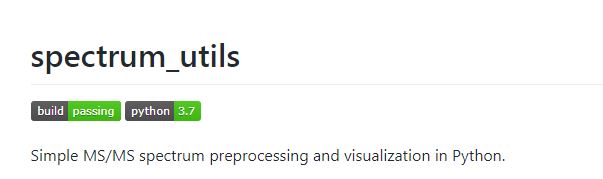
MS/MS visualization in Python!


I do love this python mass spectrometry community. Keep it coming, y'all! This is simple, the output is nice, the code is open...everything you could want...


Friday, November 30, 2018

The ULTIMATE Proteome Crosslinking Protocol!

THIS IS THE BLYBERMONDAY/CRACK FRIDAY SPECIAL I WAS LOOKING FOR!

EVERY step of the process.

A bunch of stuff I hadn't even thought about, like cell lysis, reaction conditions, offline fractionation (including what fractions to keep and which to toss)

AND A PRIDE FTP SITE WITH PROOF THAT ALL THIS WORKS!!

Is it my data processing pipeline? Nope! Cause now I have files where Proteome Wide Crosslinking actually worked!!

Thursday, November 29, 2018

Last QE Turbo post, for real!


This might be the last one. (Continuation of this post, possibly yesterday? I forget)

What if the fill times were exactly the same on a QE HF running the same method and the same fill times (arbitrarily 30ms, cause why not?) and all I changed was the MS/MS resolution? 15k vs 8k?

You'd expect to get more scans when using 8k MS/MS, right? Because you'd definitely get more scans completed when you didn't need the full fill time.  More scans = more peptides!

I had a small opening overnight so I put on 500ng of HeLa and ran it on a 45 minute gradient 4 times.
2x with 60k res MS1/15k res MS/MS with top 30 and 30ms max fill time
2x with same except 8k res MS/MS

With 15k MS/MS -- 46,900 and 46,978 MS/MS scans
With 8k MS/MS -- 54,012 and 53,606 MS/MS scans

14% more MS/MS scans! WOOHOO!!

Then it gets less cool.


Clearly this is pseudo-pscientific, but it doesn't appear that my HF benefits from running MS/MS at 8,000 resolution. Honestly -- this is about what I'm seeing on the Fusion 1, to the point I don't use a transient below 15,000 resolution. I would like to take this apart. Like -- where are those 7,000 extra MS/MS scans going? Does mass accuracy appear to suffer due to peak coalescence at the lower resolution? That seems the most likely explanation, but no time to investigate right now.

This is good for me, probably. There was this increasing temptation to use MaxQuant.Live to "hack" my instrument every time there was a gap in the queue, but with this kinda settled, it's time to get back to the metabolomics!!