Some scammer is pulling email addresses of proteomics people offline and pretending to be US HUPO.
If it doesn't come from the USHUPO.org email (with no silly aliases) it probably ain't real.

Some scammer is pulling email addresses of proteomics people offline and pretending to be US HUPO.
If it doesn't come from the USHUPO.org email (with no silly aliases) it probably ain't real.

We tricked US HUPO into giving us more money to ramble with smart successful proteomics people!
AND our sponsor made us artwork and put up a cool landing page on their website. You can check it out here.
The first 2 are live with Birgit Schilling (and some guy in California....Yotes..? Jack? Jerry? ....John? yeah..? yeah...!) John Yates! A guy so interesting to talk to you can get through a 2 hour conversation you really didn't get to papers that your read over and over at the beginning of your proteomics career? For me, it is these two malaria papers:
https://www.nature.com/articles/nature01107 and https://genome.cshlp.org/content/14/11/2308.short
Due to some mass spec meetings messing with everyone's schedules, we won't have another podcast for a while, but we're lining up guests for the summer right now.
Like a lot of people I know, I've been downloading any Orbitrap Asstral file that has become available and been digging through it.
The MacCoss lab data is up on Panorama here.
The files will open in QualBrowser (so...probably FreeStyle) so you can dig through them. The first thing that is extremely obvious is how unbelievably dense the data is. Sure, the TIMSTOF and ZenoTOF are absurdly fast but there is just something striking after looking at Orbi-Orbi data and then moving into Astral data in the same interface.
As I was just leisurely browsing through one file, I kept seeing a couple of my old friends like 204.086 and the smaller mass oxonium ion glycan fragments.

I dug up Conor Jenkin's original DIDAR script that pulls out MS2 spectra that contain diagnostic fragment ions (....can't find the github link, I'll ask and put it up later -- actually, here is the script, you just need to change the text in the diagnostic ion file, I finished a GUI for it, but that paper is a bit down the pipeline) it pulled out crazy numbers of potential PTMs based on diagnostic fragment ions --

It pulled out 205,000 potential oxonium ions +/- 0.002 Da of this list of fragments out of a file with like 100,000 MS2 spectra?
Since I'm lazy and it took a long time, I didn't set it to count each one individually, so an MS2 with a very typical HCD of a single GlcNaC would produce the top 3 ions in this list and it would count that as 3.

Still -- I run this the lazy way on files all the time to see if it is worth going in and running a PTM search and I've never pulled out 205,000 ions out of a single file.
I know Dionex and Friends dropped like 18 preprints during ASMS and I can't read those until after I get this last June grant application out, so probably someone has looked at PTMs in Asstral data, but if not -- it looks like an absolute goldmine for unenriched PTM searches.

Wooo..what a month so far! This will need to be brief, but I FINALLY got to attend the single cell proteomics conference at NorthEastern, and I even got to ramble about why I'm doing SCP.
For a full list of the speakers and topics, check out the main meeting website here. Many of the full talks will go live I'm sure as soon as people get caught up from their packed June schedules.
Don't be deceived by this picture, this meeting was paaacked and big numbers of people were tuned in remotely whenever we saw the zoom screen between talks.

Meni Wanunu (who might have the best name to try and say 3 times fast) really broke down where other technologies are tody for getting to single cell or single protein sequencing. My interpretation -- we don't have much to fear from them in the forseeable future.
Two versions of nanopore are working, one in which the regular old nanopore is adapted for proteins. At this point in time no one has successfully pulled off more than a small tryptic peptide. The second type actually binds the protein to an oligonucleotide string and the protein gets "ratcheted" through the pore as the oligo gets through. This seems super promising until you think about the detector....which is current based....so now you've got the current shift from the nucleotide coming out of the pore (which has an error bar on it AND you've got the current shift from the amino acid coming through (which has an error bar AND a 20 different possibilities). The best anyone has been able to show is that they can pretty much get every amino acid that comes through to 1 of 3 possibilities. I bet after 30 get through you could say #1 is A,E or N and #2 is E,T or D and #3 is L(I),I(L), or P and so on and eventually figure out exactly what that sequence probably is. Which is probably better in some ways than where things were when Don Hunt was doing stuff in the 1980s with mass specs....?
The ending estimate was that current technology with 1 million nanopores could completely read about 1 billion amino acids (one cell worth, give or take an order of magnitude) in about 24 hours. So...I bet that's enough to raise an easy 10 billion dollars on a technology that probably won't catch up before I retire.
Erwin Schoof and Ryan Kelly were excellent of course, and they dropped some very small hints about an Orbi TOF (or Orbi - HOOET, or whatever) that was about to come out at ASMS.
Neil Kelleher showed a DESI based single cell profiling technology FOR TOP DOWN SINGLE CELL at thousands of cells per day. Link here. Crazy.
The biologists sort of stole the show, though. Sabrina Spencer at UC Boulder demonstrated live cell imaging and how her team has been working out how cell cycle really works (at the protein level) and Kristin Burnum-Johnson (PNNL, and you could argue also big time mass spectrometrist) demonstrated spatial profiling to study super complex multi-organism systems to find important metabolic enzymes for biofuel production. Super innovative stuff I'd never ever seen before. I don't think what she described has been published yet, but I'll be on the lookout for it.
Gotta move to the next project, but again super glad I got to finally attend this great meeting and see some of what is going on in this amazingly innovative space.

(Obvious marketing disclaimers, but...I've been told by someone I really truly trust that she/he is obtaining these numbers...)
5500 proteins from 125pg of material... 2k from 15 pg...????
If you haven't been to this awful blog or haven't been able to weather any of my recent tirades in full length, my estimate has been that the amount of peptide I actually get from a cell with 250 picogram of protein is...around 100-150 picograms... 3k proteins is unreal. 5,500 is....


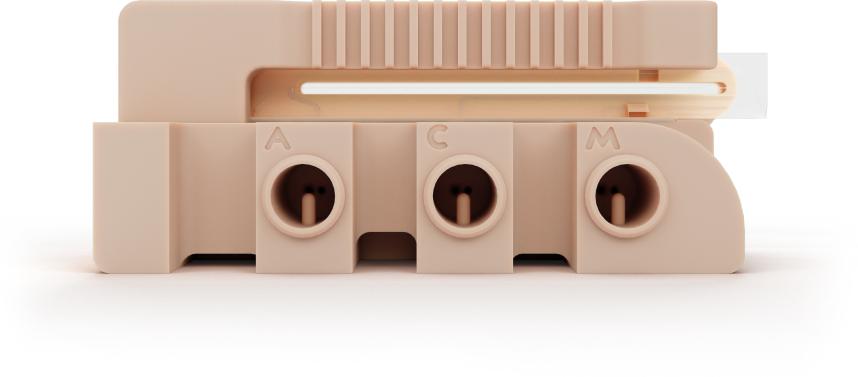
Our friends at SCIEX have a uniquely weird capillary electrophoresis system or kit that allows them to separate charge variants by their electrophoretic mobility! It's super cool because it is coupled to a UV readout so you can rapidly (a couple of minutes) realize that there is more complexity in your mAB you produced.
Now....what if you very carefully separated your charge variants....and they eluted right into a 7600 for intact/top down analysis? The drop in complexity in your sample input is going to be so so so helpful. BTW, the 7600 has a huge upper m/z limit. I forget, but it is 40k or 60k or something. Throw in the ability to do EAD/CAD and combinations of the two and you've got a ridiculously poweful solution for antibody characterization.
I can't find the picture online that I saw, but it is all sort of streamlined together. The box looks a lot more elegant than the name....it's something like icIEF-MS.
I'm willing to look past the name and think hard about how I'd use this sort of data, and so should you weird biopharma/top down people.

What are the biggest weaknesses in mass spec imaging? Dynamic range? Limited targeting abilities?
What if there was an imaging triple quad?
Check out the Waters Xevo Absolute with DESI!

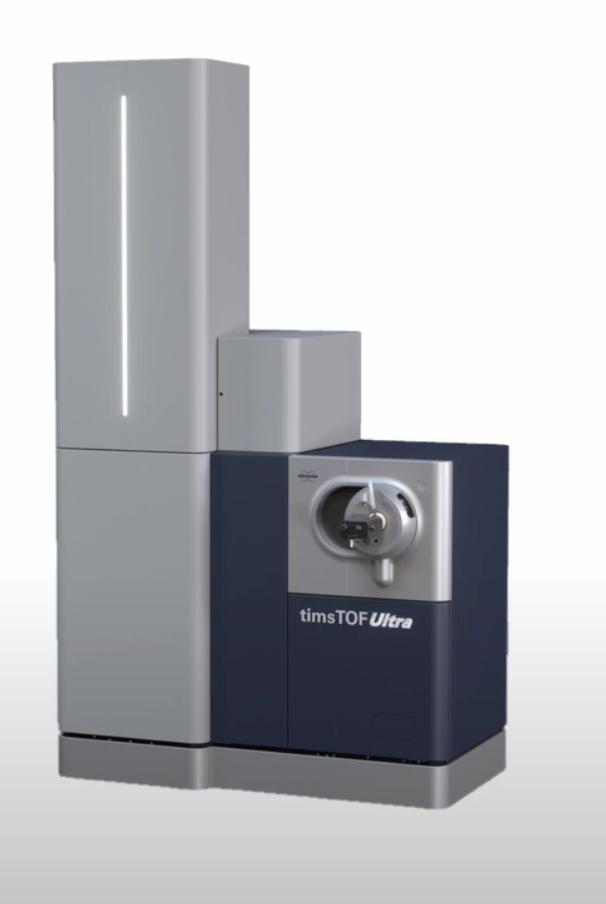
Well... so...if you take the TIMSTOF SCP, and put the TIMSTOF HT digitizer and higher dynamic range TIMS and
YOU FIX THE AWFUL GOSHDANGED NANOSPRAY SOURCE?
Did that lady just say 300 HZ???? 300 HZ?? I probably misheard her....
For some context, I really have to make my library files for single cell on my TIMSTOF Flex I can't put more than 20 nanograms on the SCP, and 20ng doesn't give you the kind of depth that you get with 400ng on a Flex. But my Flex can't see hardly anything in an unlabeled single cell, so the SCP has to be here.
The Ultra has the sensitivity of the SCP, the dynamic range of a more normal TIMSTOF and it looks way way faster? AND they looked at the worst nanospray source ever designed and tried to do something about it?

It turns out this thing is a whole lot weirder, but I can't spend another 3 minutes on it.